







Understanding CAR-T
Explore the science behind chimeric antigen receptor (CAR) T-cell therapy and its technological evolution.
- Leukapheresis
- T Cell Isolation
- Genetic Modification
- CAR-T Cell Expansion
- Patient Infusion
- In Vivo Anti-Tumor Activity


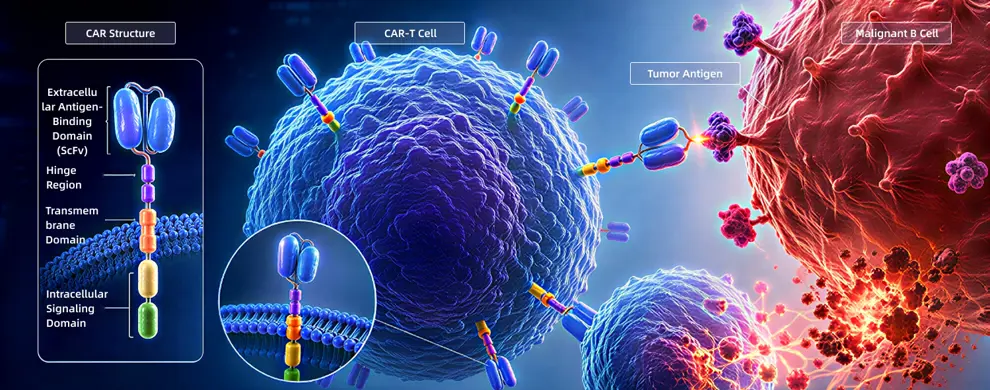
- Chimeric Antigen Receptor T-cell (CAR-T) therapy is an innovative cell-based immunotherapy that genetically engineers a patient's own T cells to recognize and eliminate cancer cells, offering new possibilities for cancer treatment.
- T cells are a critical component of the human immune system, responsible for identifying and eliminating infected or abnormal cells to help protect the body against disease. However, some cancer cells can evade immune surveillance through various immune escape mechanisms, allowing them to survive, proliferate, and spread.
- CAR-T therapy uses genetic engineering to modify a patient's own T cells so that they express Chimeric Antigen Receptors (CARs) capable of specifically recognizing tumor-associated antigens. After manufacturing, the engineered CAR-T cells are infused back into the patient, where they actively recognize and destroy tumor cells, providing a targeted anti-tumor immune response.